
Why Web Designers Use Divi Theme to Build Better Websites
We may earn a commission from affiliate links in this post. Disclosure policy
Choosing the right WordPress theme can shape everything that comes after, from how quickly a site gets built to how easy it is to update six months later. That is one reason so many web designers continue to work with Divi. It gives them the freedom to create polished, custom-looking websites without turning every edit into a technical headache.
For business owners, that means a website that looks professional and is easier to manage. For designers, it means a flexible system that works for everything from service sites and blogs to landing pages and online stores. Divi has earned its place because it helps bridge the gap between design quality and day-to-day usability.
Why Divi keeps showing up in professional web design projects
There is no shortage of website builders and WordPress themes, so a tool does not stay popular by accident. Divi continues to show up in real projects because it solves practical problems. It allows designers to work visually, move faster, reuse proven layouts, and still create websites that feel tailored to the brand rather than locked into a generic template.
That flexibility matters in client work. A restaurant website, a consultant’s lead-generation site, and an agency homepage may all need very different layouts, but they still need to be easy to build and easy to maintain. Divi handles that balance well. For anyone still getting familiar with the platform, it helps to start with a simple overview of what Divi is in WordPress.
Another reason designers like Divi is that it works for both launch and growth. A site can start with a strong foundation, then expand with new landing pages, blog content, service pages, and conversion improvements without needing a full rebuild every time the business evolves.
A smoother way to build and edit a WordPress website
One of the biggest reasons people enjoy using Divi is the editing experience. Instead of fighting with a rigid theme setup, you can work visually and see changes as you make them. That saves time, but more importantly, it makes the process feel more creative and less mechanical.
For designers, that means fewer roadblocks between an idea and the final layout. For clients, it often means they can handle small edits later without worrying that they are going to break the whole site. This is one of the reasons Divi is often chosen for business websites that need regular updates. If you want to see how that workflow works in practice, getting started with Divi using the Divi Builder is a helpful next read.
That ease of editing is not just a convenience. It becomes part of the website’s long-term value. A site that is easy to update stays more current, and a site that stays current usually performs better over time.
Why Divi works especially well for business websites
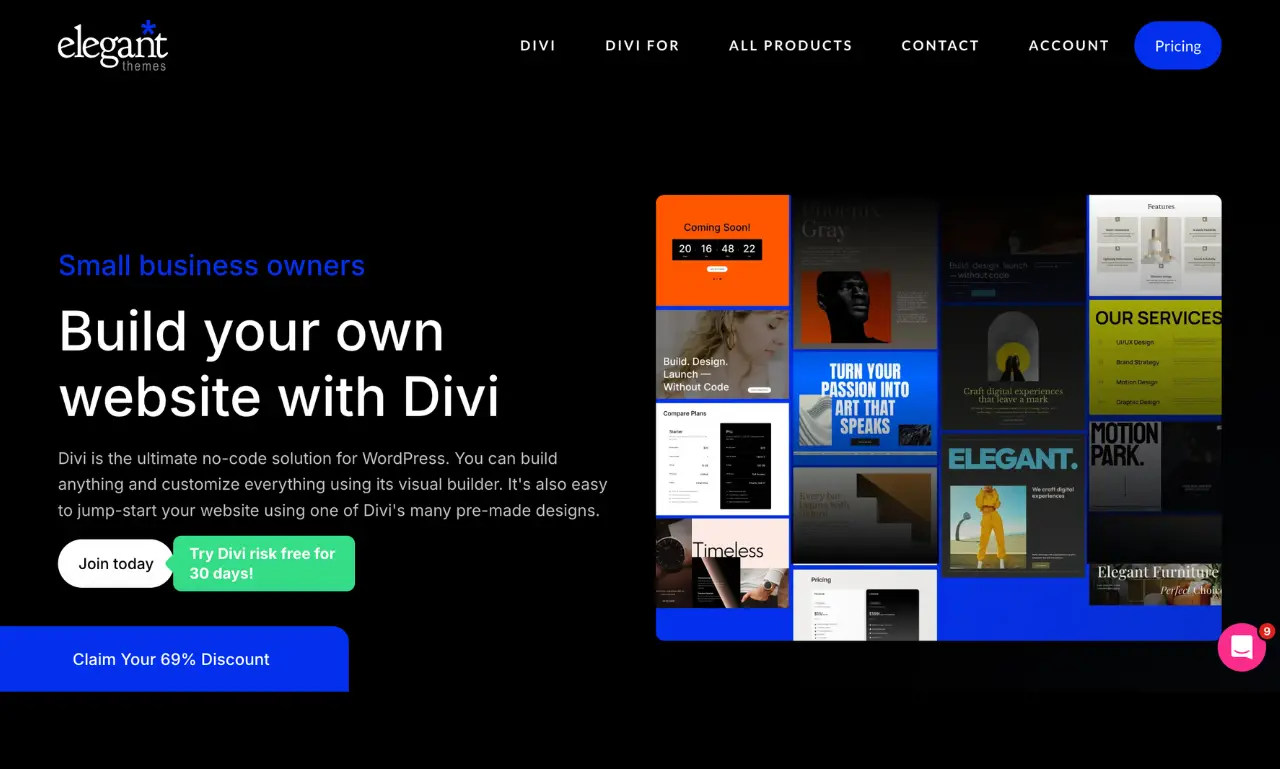
Business websites have a job to do. They need to build trust, explain value clearly, guide visitors through the right next step, and turn traffic into real inquiries or sales. A beautiful layout helps, but beauty alone is not enough. What matters is whether the design supports the goal.
Divi works well here because it gives designers control over structure. A homepage can be shaped around credibility. A services page can be built around clarity and conversion. A landing page can remove distractions and focus attention exactly where it needs to go. That kind of flexibility is hard to get from a theme that only offers a handful of preset page styles.
For companies that want more than a basic template, custom help often becomes the next logical step. That is why businesses looking for a more strategic build often move toward professional Divi and WordPress services once they realize that design, speed, SEO, and conversions all need to work together.
Divi gives designers room to make a site feel like a brand
A strong brand is not just a logo and a color palette. It is the way a site feels when someone lands on it. The spacing, typography, hierarchy, calls to action, and page flow all play a part in that experience. Divi gives designers enough freedom to shape those details in a way that feels intentional.
That does not always mean building everything from scratch. Sometimes the smartest route is to begin with a solid base and customize it properly. That is where Divi layout packs and how to use and customize them become useful. They can speed up the process while still leaving room for the site to feel unique rather than mass-produced.
The result is a better middle ground. Designers can move efficiently, and businesses still get a website that feels aligned with their message, their audience, and the way they want to be perceived.
Child themes, templates, and custom builds all have their place
Not every project needs the same starting point. Some websites can begin with a layout pack and do just fine. Others need the stronger structure of a child theme. More complex projects may need a fully custom build because the website plays a bigger role in marketing, lead generation, or content strategy.
What matters is choosing the right starting point for the project, not blindly picking the most complicated option. A simple business site might not need a full custom framework. A niche site with repeatable design patterns might benefit from a child theme right away. A company investing seriously in growth may need something more tailored from the beginning.
For site owners who want to start with a stronger foundation, the Divi Child Theme Generator is a useful tool. It makes the setup process easier and helps create a more reliable base for future customization.
Why Divi 5 matters for anyone planning a new site or redesign
Divi has already been a trusted option for years, but Divi 5 matters because it points to where the platform is headed next. For designers and businesses, that means thinking not just about how a site looks today, but how easy it will be to improve and maintain in the future.
That becomes especially important during redesigns and rebuilds. A business that is already updating its website should be thinking ahead, not just patching the past. Anyone planning that kind of move should read how to migrate your website to Divi 5, because timing, compatibility, and site goals all matter when making the switch.
For some businesses, that planning phase naturally leads to action. When that happens, a page like request for a free quote becomes more relevant than another tutorial because the question has shifted from “what is possible?” to “how do we get this done well?”
Divi can perform well for SEO and speed when it is built properly
A lot of people ask whether Divi is good for SEO or whether it can load quickly enough for modern standards. The honest answer is yes, but results depend on how the site is built. No theme automatically guarantees rankings or perfect performance. Good outcomes still come from smart decisions.
That includes page structure, mobile design, image optimization, internal linking, clean layouts, caching, and choosing the right plugins. For readers focused on site performance, Divi speed optimization is worth reading. For those looking specifically at search visibility, Is Divi good for SEO? gives a better picture of what to expect. And for anyone refining the technical side of the setup, best SEO plugins for WordPress and Divi can help narrow down the right tools.
A plugin like Rank Math also makes sense for site owners who want more control over titles, schema, indexing, and on-page optimization without making the setup overly complicated.
Divi is not just for homepages. It is strong for landing pages and eCommerce too
One of Divi’s biggest strengths is that it adapts well to different kinds of pages. A homepage needs storytelling and trust. A landing page needs focus. An online store needs clarity and flow. Divi handles each of those use cases well because the layout is not locked into one narrow structure.
That is especially useful for businesses running paid traffic, lead-generation campaigns, or service-based marketing. A well-built landing page can remove distractions and move a visitor toward a single action. Anyone exploring that side of Divi should take a look at Divi landing page layouts, because they show how focused, conversion-friendly page design can work in practice.
On the eCommerce side, Divi can also be a strong choice for many WooCommerce projects. If selling products is part of the plan, building an e-commerce site with Divi is a useful guide, and Divi Ecommerce Pro can help store owners who want a more purpose-built setup.
The real question: should you build it yourself or hire a Divi expert?
Divi is beginner-friendly enough that many people can start on their own. That is part of its appeal. But there is still a big difference between getting a website live and getting a website right. A site that truly supports the brand, loads well, ranks well, and converts well usually takes more than just installing a theme and moving some blocks around.
That is why many site owners start with DIY and then look for help once they run into issues with design consistency, speed, mobile layout, bugs, or conversion flow. If you are already dealing with those problems, guides like fixing Divi bugs and secure Divi websites are useful places to start.
And when the project calls for a better end result from the start, it makes sense to talk to someone who works with Divi every day. That is where DiviCake’s services or the contact page become the natural next step.
Final thoughts
Divi continues to be a favorite among web designers for a simple reason: it helps them build websites that look better, work better, and stay easier to manage. It gives enough creative freedom to produce custom results, but it also keeps the editing experience practical enough for real-world business use.
That combination is hard to beat. A website should not only impress people on launch day. It should still be easy to improve, expand, and maintain months later. Divi makes that possible, and that is exactly why so many designers continue to rely on it.
Submit a comment
Comments are read before they appear. Your email is not published.
Thanks. Your comment is waiting for review and will appear here once it is approved.